Leesha is a multi-disciplinary Indian practitioner based in London who works across the domains of architecture, interior design, installation art, and fine arts. Delving into the profound connection between humans, nature and architecture, her works explore themes of healing, comfort, and well-being.
Having lived in the UAE, India, and now the UK, Leesha’s multicultural experiences offer her a broad perspective, enabling her to empathize with and create spaces that meet the diverse needs of society. Her distinctive educational blend of Engineering, Business, and Art, coupled with her exposure to three different countries, allows her to transform intricate architectural, psychological and philosophical concepts into creative expressions of art and design.
Her inspiration comes from her artistic practice in which she explored cityscapes as a backdrop of life, highlighting the hustle and bustle of the day and the comfort and quietude of the night using watercolour as a medium; an exploration which further extends in her architectural practice.
In her design practice, Leesha explores the intricate connection among humans, nature, and architecture, examining their impact on quality of life. Her work questions how interior spaces affect emotions, thoughts, and behaviours of inhabitants, and translates these insights into designs that are visually, emotionally and spiritually enriching.
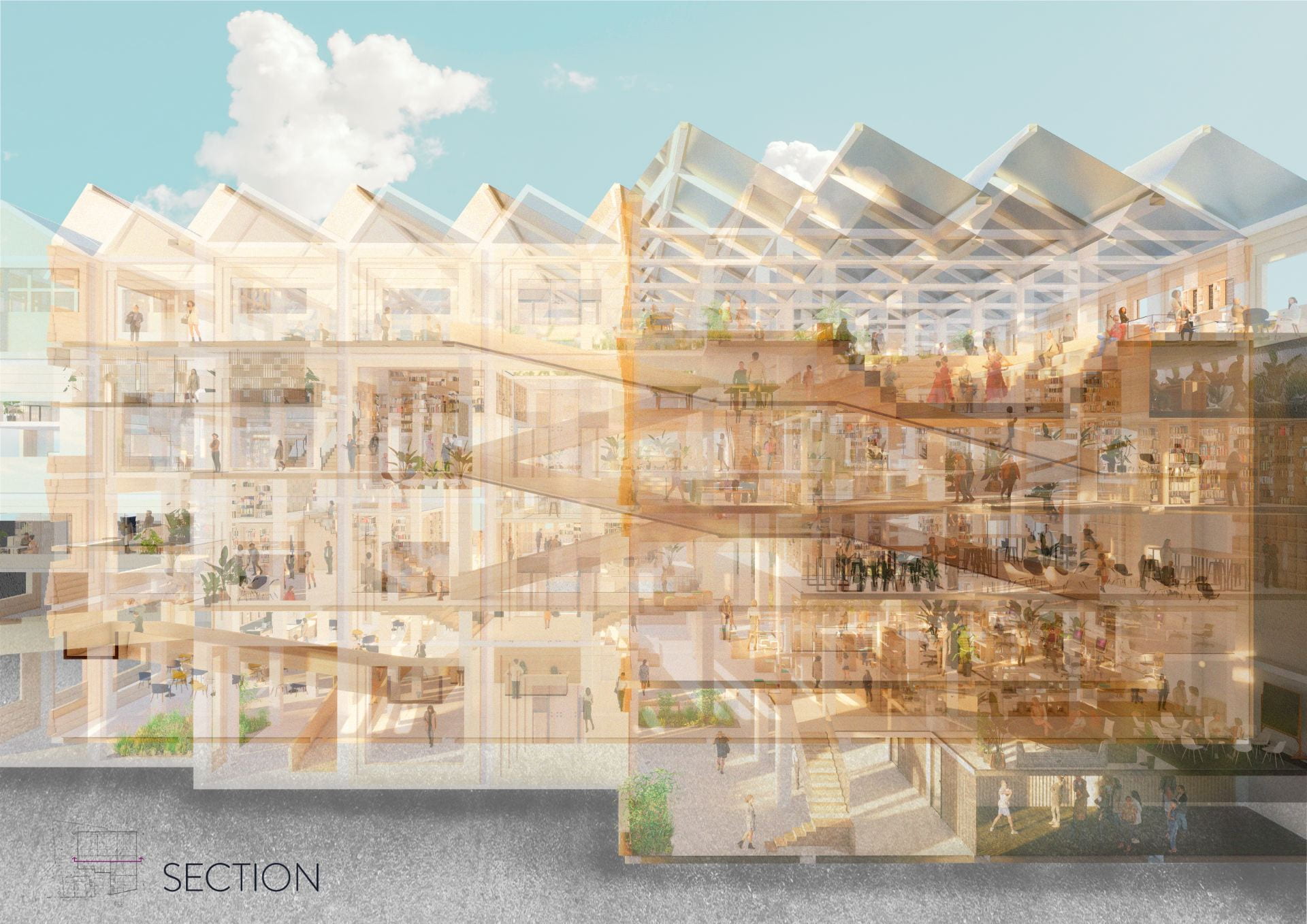
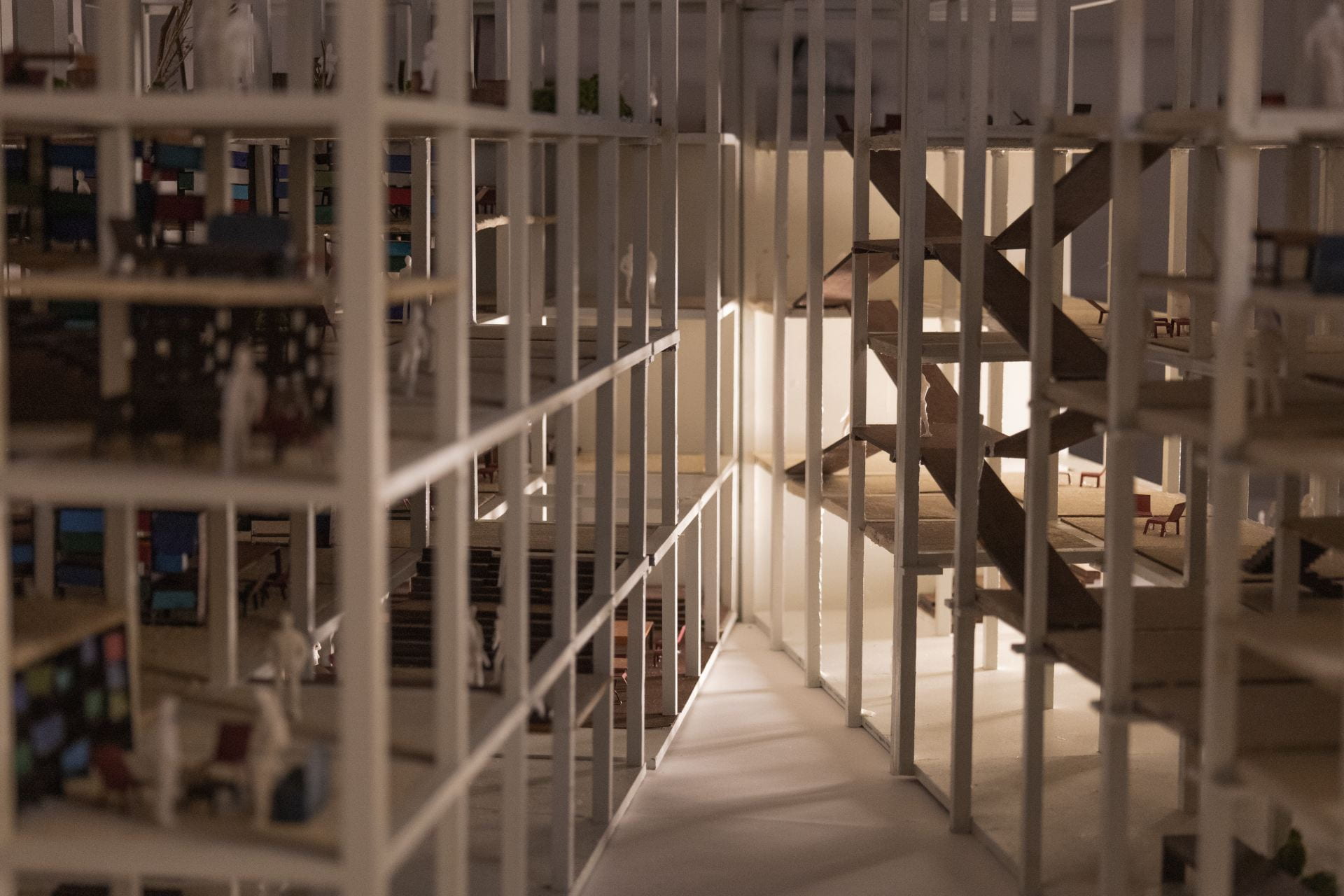
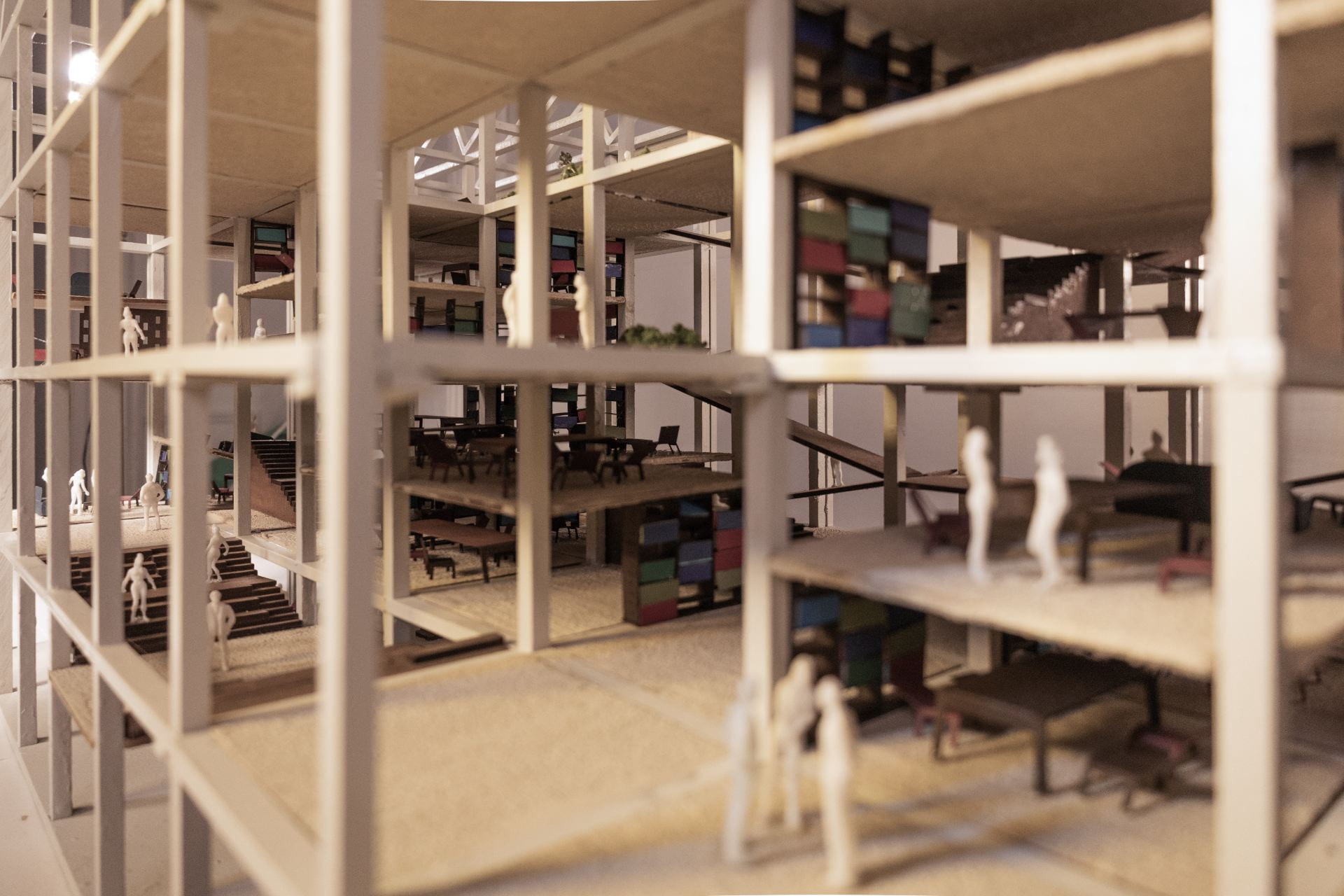
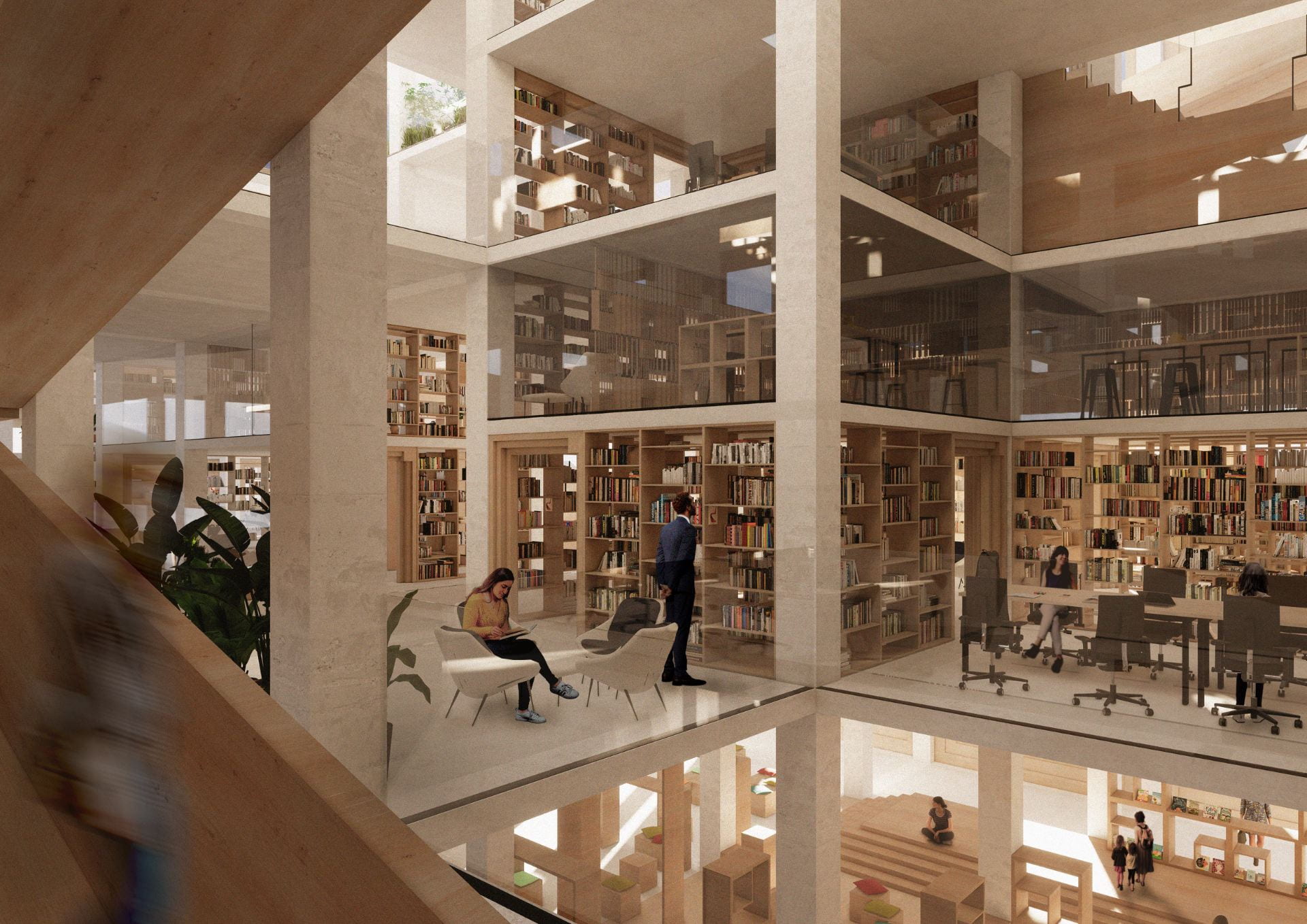
In her thesis project, the Library of Mind, she explores themes of slow reading, contemplation, and thoughtful exploration by taking one on a journey to the self and then back to the world. Perceiving Libraries as the guardians of knowledge and culture, she designed the library inspired by the labyrinth’s metaphor for life, which views life as a path to be experienced rather than a puzzle that needs to be solved.
The space serves as a sanctuary for self-reflection, emotional connections and communal healing, as it blends various activities under one roof by offering both the quiet of solitary study and the vibrancy of spontaneous gatherings.
“The library asks one to drift in its winding paths, with each turn holding the promise of a discovery, a new conversation or idea.”
The project thus reinforced Leesha’s design philosophy of deriving aesthetics from the concepts of comfort and healing and translating them into therapeutic communal spaces to craft spaces inspired by and designed for people.